Overview
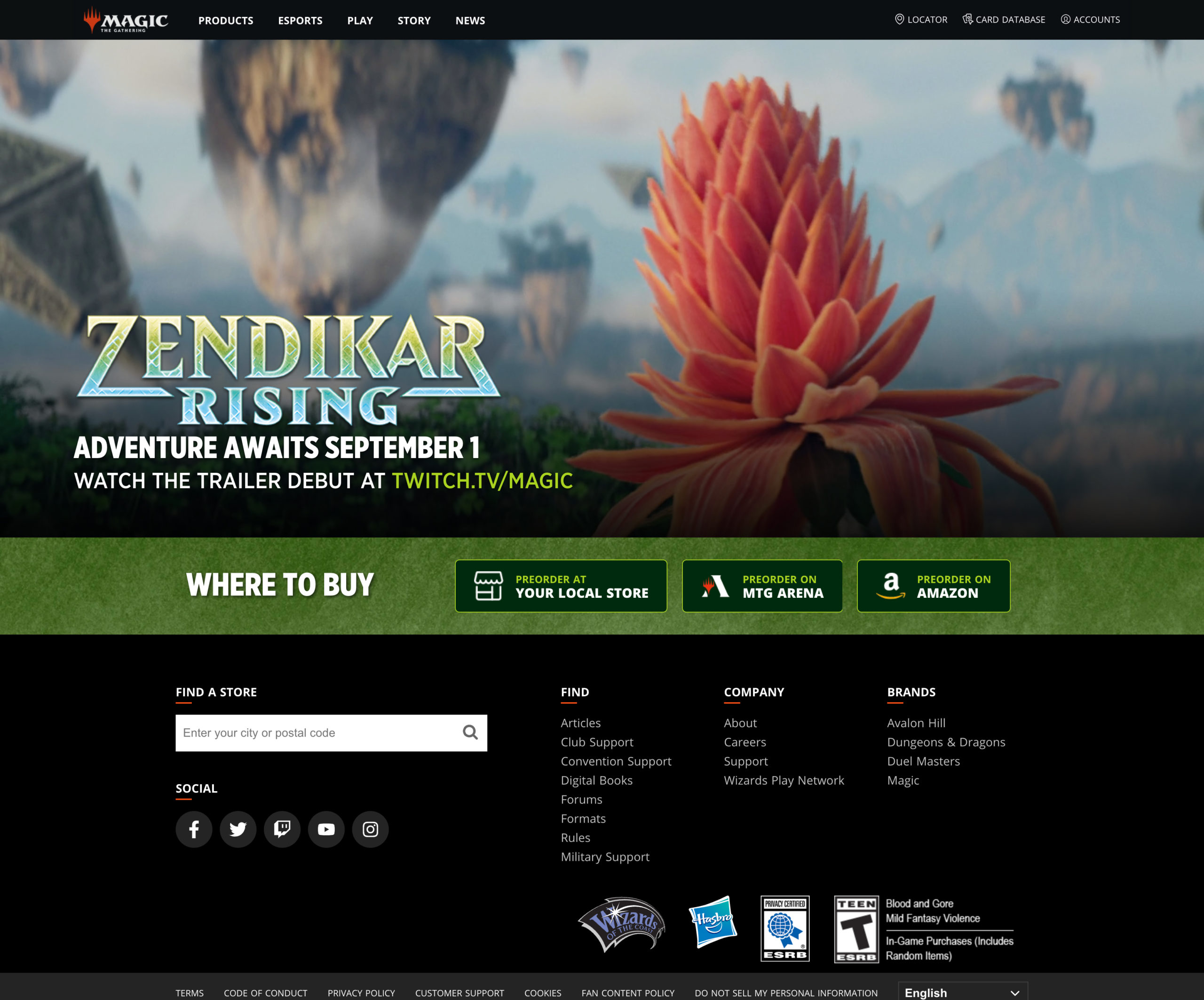
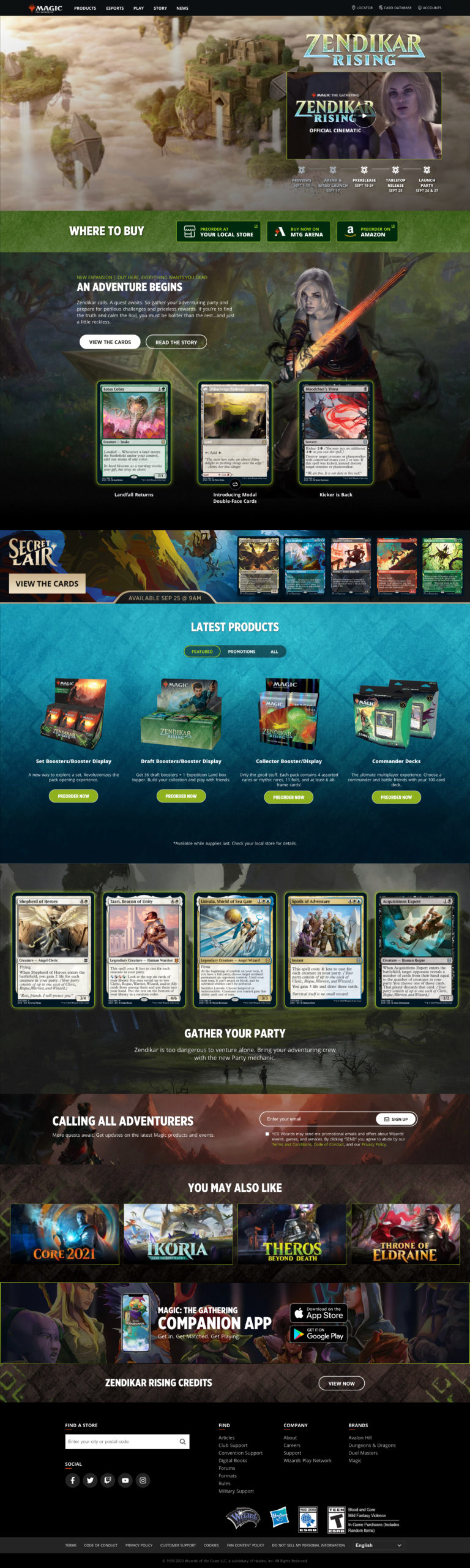
Zendikar Rising is the Fall 2020 marketing campaign for the trading card game Magic: The Gathering. With the Zendikar Rising marketing campaign we launched a reimagined product pages for better consumer experiences.
Problem Statement
Zendikar Rising was our first product page using the new CMS (Content Management System) Contentful. With the new CMS we were refreshing product page widgets to drive engagement, lower load times and have the technology which allowed us to A/B test the product pages to drive innovation and establish a strategy for future campaigns. Our goal was to have a marketing and user first consumer experience allowed us better insights to drive better engagement.
Users and Audience
- Primary: Enfranchised Magic Players. These are individuals who want to know what is unique about the Magic set (such as mechanics, what cards are exciting, etc)
- Secondary: Lapsed Magic Players. Individuals who are familiar with the game but might not have played in awhile.
Roles and Responsibilities
Project Owner
Sara Nelson
UX & Project Lead
Anne Hendricks
Project LiveOps/Build
KJ Smith
Creative
Haven Agency
My Role
UX & Project Lead
- Become subject matter expert on campaign
- Maintain project schedule and timelines from project kick-off through point of sale
- Define technical requirements and roadmaps for new web enhancements
- Collaborate with Project Owner, LiveOps, Internal Creative as well as CRM and UA on innovative campaign web solutions that achieve business goals and drive engagement
- Outline web marketing plan through each phase
- Coordinate timelines and ecosystem mapping
- Pitch web marketing plan to Senior Marketing Manager, Digital Direct Marketing Director, Brand Manager and UA Director
- Outline creative requests for Internal Creative team and oversee development
- Manage vendors for creative and development
- Work with LiveOps through build process
- Communicate with internal stakeholders
Scope and Constraints
- 2 Product Pages for A/B testing as well as a stub (or minimal) page to allow us to turn on the product page URL ahead of time to allow LiveOps more publishing time debut day.
- New widgets. This was the first product page that would be launching in the new CMS system allowing an opportunity to reimagine from a marketing perspective how best to engage players.
- Limited timeframe. This campaign was kicked off in early June 2020 for launch in late August 2020.
- Other High Priority Projects. Along with the marketing campaigns other redesign projects were in the works which the team was working on.
- Updates to MTG Arena website in support of campaign beats (preorder and available now)
- Magic homepage updates in support of campaign marketing beats.
Process
At the start of the Magic marketing campaign the Brand Managers do a breakdown for the Marketing channel leads, including key highlights, timelines for what is to come from debut, to timing for product sales. As Lead, I typically start examining the cards as well as world guides to address:
- Key Selling Points
- What is unique about the set
- What is different from previous sets? Example: are the sellable products different? Are there new products available?
- What are the digital tie-ins with MTG Arena and Magic Online?
With the product pages moving to a new CMS system extra lead time was needed for us to determine ideal product page hierarchy, widget needs from both marketing, business and any legal requirements, as well as timeline management so it was ready with ample time for both Stakeholder review, technical requirements outline, rounds of wireframe reviews with our vendors, building of assets and code development.
Research
Sara and I brainstormed our product page needs, examining what had to date, been common on the Magic campaign product pages and how to fit it within the page hierarchy. The pages have unique hierarchy needs incorporating marketing to the players with the KSPs and cards, the legal requirements such as card lists, and Studio X requirements such as set credits.
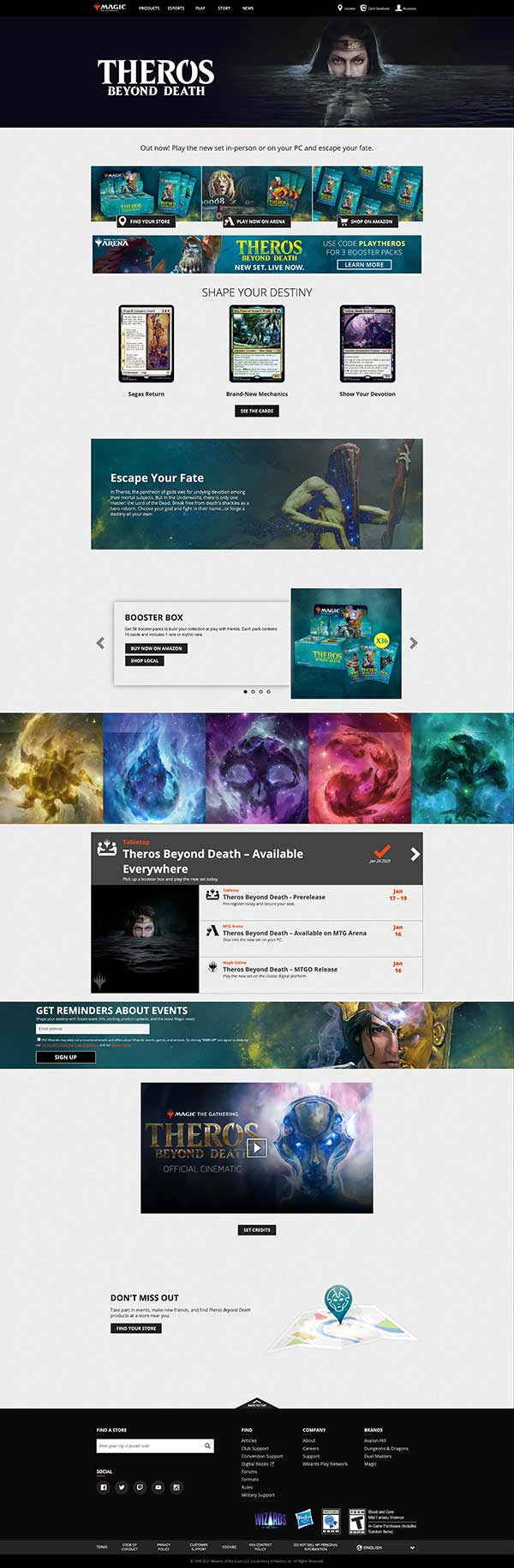
An example of an old product page on the Magic website
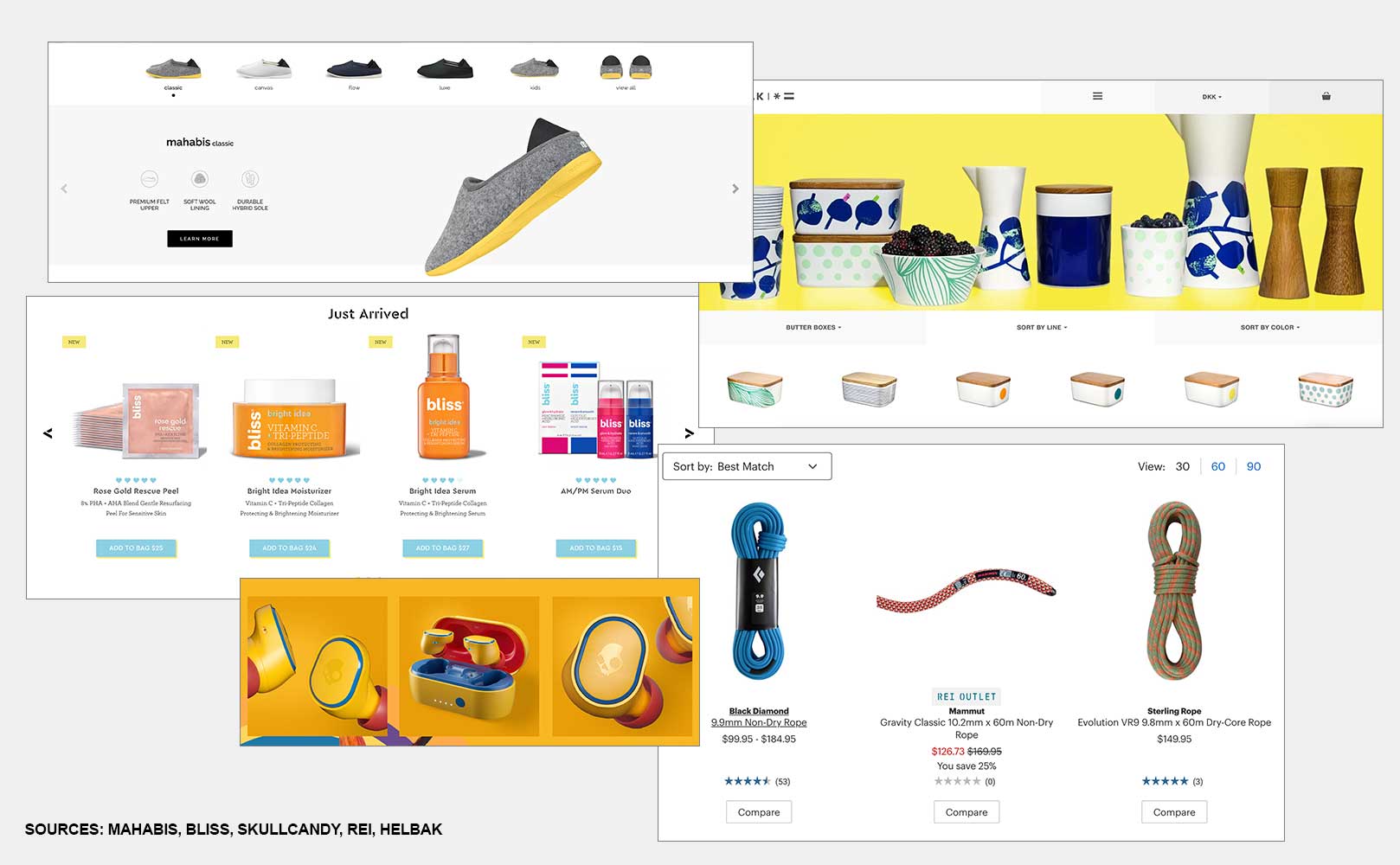
Once the page hierarchy needs were prioritized we started brainstorming, per widget, examining what were the needs within. After completing the brainstorming session, I researched patterns to compile mood boards and inspiration around UI solutions for our new CMS system for each widget. I concentrated on the product carousel in my research. Magic players have a depth of products from physical products they are able to buy through their local game stores as well as, in more recent years, on Amazon. I examined what game studios were doing for physical products such as those selling for Xbox/Playstation as well as examining the ecommerce space where they have multiple categories with multiple SKUs and potential multiple ways to buy.
Product Page Phases
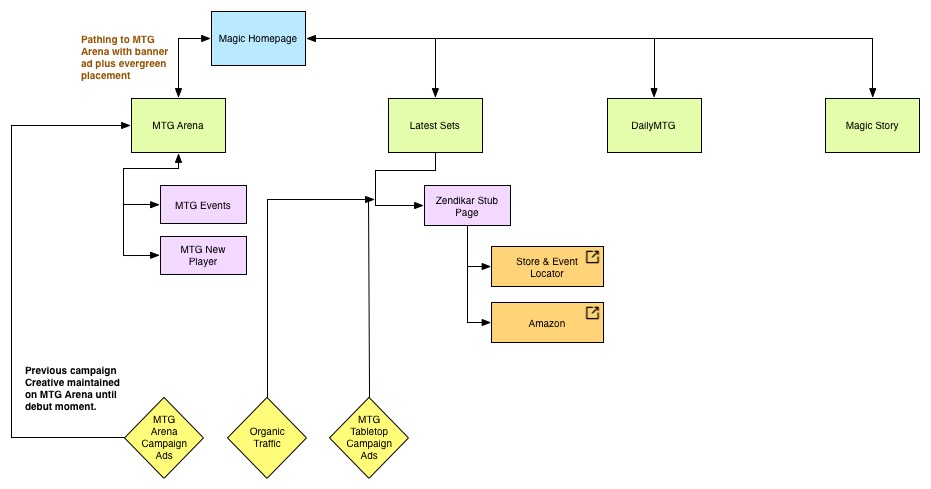
As mentioned above for the launch of Zendikar Rising we proposed a version of the product page that would allow us to turn on the URL before the debut without the potential of spoilers. This pared down product page would simply feature a header to inform of the timing for the debut, pathing for them to be able to preorder through their local game store or Amazon. Additionally they would be able to opt-in to our newsletter to be the first to know about exciting Magic offerings.
Stub page user flow
Campaign ideal user flow
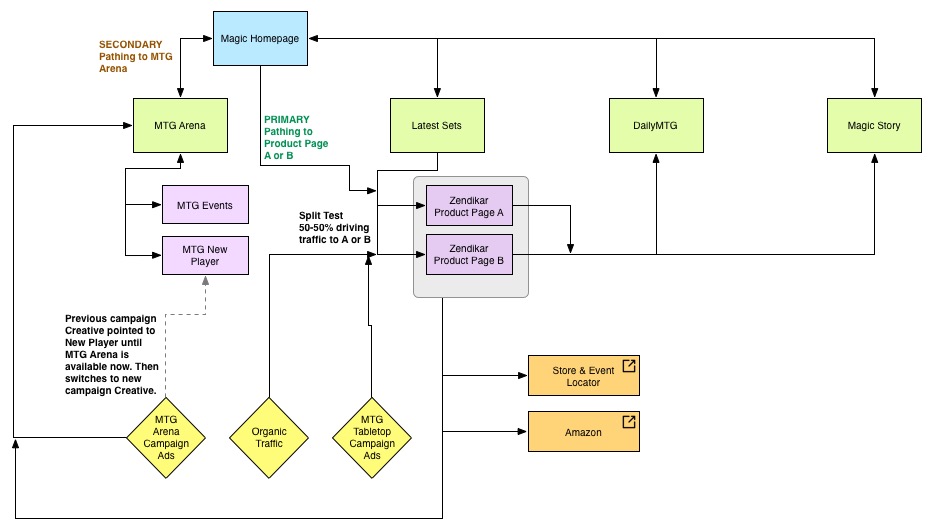
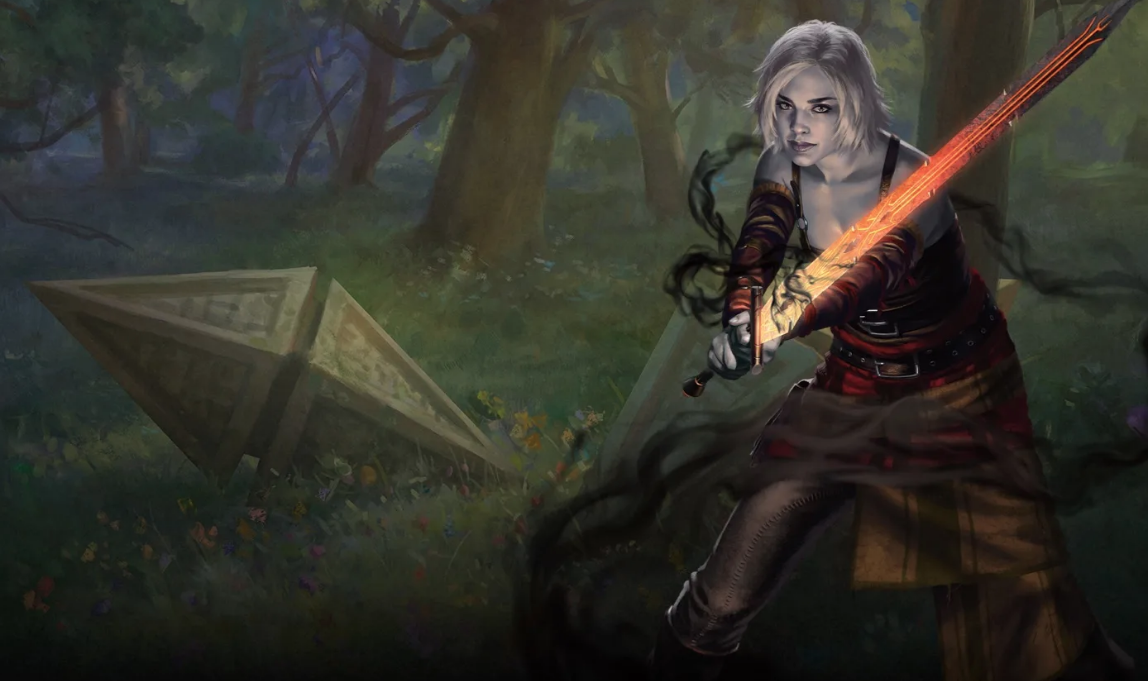
In building out the marketing plan Sara and I hypothesized Magic players would engage more with the product pages and have higher click through rates with a more world building focused product page versus a more generic broad overview level approach. What would a more world building approach look like for Zendikar Rising? Our fans love to engage with the cards and get excited about new, exciting mechanics. We pitched to have an additional widget that focused on cards with one focusing on the new party mechanic while both versions have a game overview section which really highlighted the KSPs of the set with cards as well as a focal character and set description to set the tone.
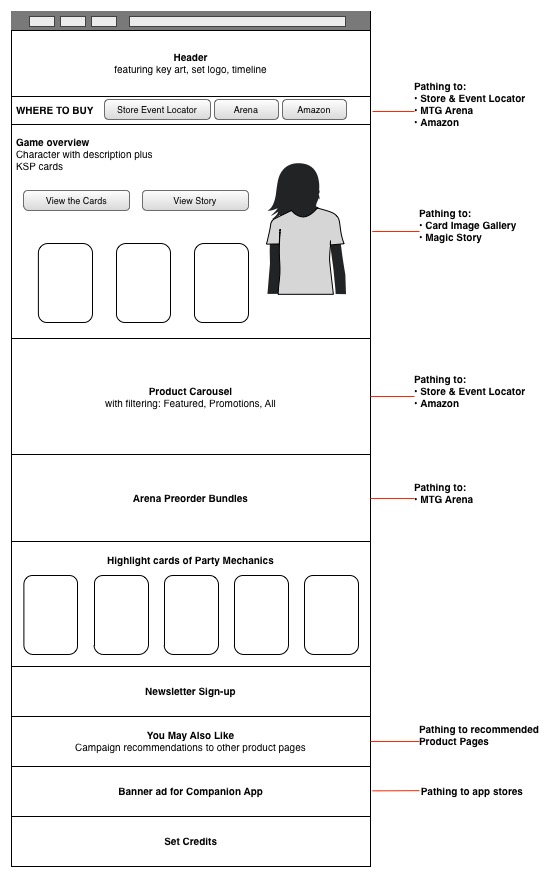
Working with our vendor Haven, we went through wireframe iteration rounds, and I compiled UI/UX feedback and direction. Additionally, I was sending creative assets for once the design build out started to happen. When the English version of the world building product page was compiled and ready for QA I pitched to our Director, as well as the Brand Managers, who provided additional feedback and modifications that were then implemented.
Outcomes and Lessons
- Stub pages: This lessened the burden on the LiveOps team because they were able to have this up days before the debut timeframe. We did not advertise this beyond turning on the page for this campaign, but this new strategy allowed us to start working close with our User Acquisition team with their media spends. In 2021 we additionally found these pages useful from an SEO perspective to up the product page rankings once the product pages were announced.
- Technical Limitations: While our product pages were ready for the debut, ultimately the technical hiccups meant we only were able to launch with one version of the product page. Our team came away with more time to sort the technology side of things out so that we would be able to launch A/B tests with our winter campaign Kaldheim.
- Product Carousel: Internally multiple teams were very excited about the new product carousel and the functionality. We were able to implement unique tracking to give us better insights into consumer behaviors, to gather data for potential future improvements, and exploration around how our fans can better engage with our products.
- Data: The new CMS allowed us a wealth of data of user engagement that we had otherwise not had before. With the technology aligned to allow for an A/B testing we decided for Kaldheim to make no functionality changes on the widgets which were already developed to allow us to gather more data for comparison before we could draw any definite conclusions on user behaviors.
Final Design